Executive Summary
A faster storefront transformed performance into revenue protection.
The retailer needed a faster, more premium storefront after its legacy commerce stack started undermining mobile engagement and checkout completion.
This representative case study shows how Laur would pair headless architecture, mobile-first UX, and conversion-focused checkout redesign to drive sub-one-second page loads and cut cart abandonment by 42%.
Headline metric
-42%
Reduction in cart abandonment
The defining KPI for the relaunch was not visual polish alone, but a measurable reduction in revenue leakage at the most commercially sensitive point of the journey.
The Business Challenge
Legacy storefront speed was undermining every paid click.
The client had a strong product and brand story, but the storefront was too slow and operationally heavy to support growth. Every additional second of delay reduced buyer confidence, especially on mobile where most acquisition traffic landed.
4.5-second mobile load times
Product and collection pages were loading far too slowly for performance marketing traffic, causing visitors to drop before they could evaluate the offer.
Checkout friction
A multi-step, visually cluttered checkout introduced unnecessary hesitation at the most valuable point in the buying journey.
Outdated premium perception
The interface no longer matched the quality expectations of a premium retail audience, weakening trust before purchase intent could compound.
The Strategic Solution
A headless, mobile-first storefront rebuilt the buying experience around speed.
The solution combined front-end architecture and UX simplification. Instead of layering patches onto the old platform, Laur reframed the storefront as a performance-sensitive conversion system where speed, clarity, and tactile feedback all support purchase completion.
Headless storefront architecture
The front-end was decoupled from the heavy backend so key shopping journeys could render with static-first speed while still supporting dynamic cart behavior.
Single-page checkout flow
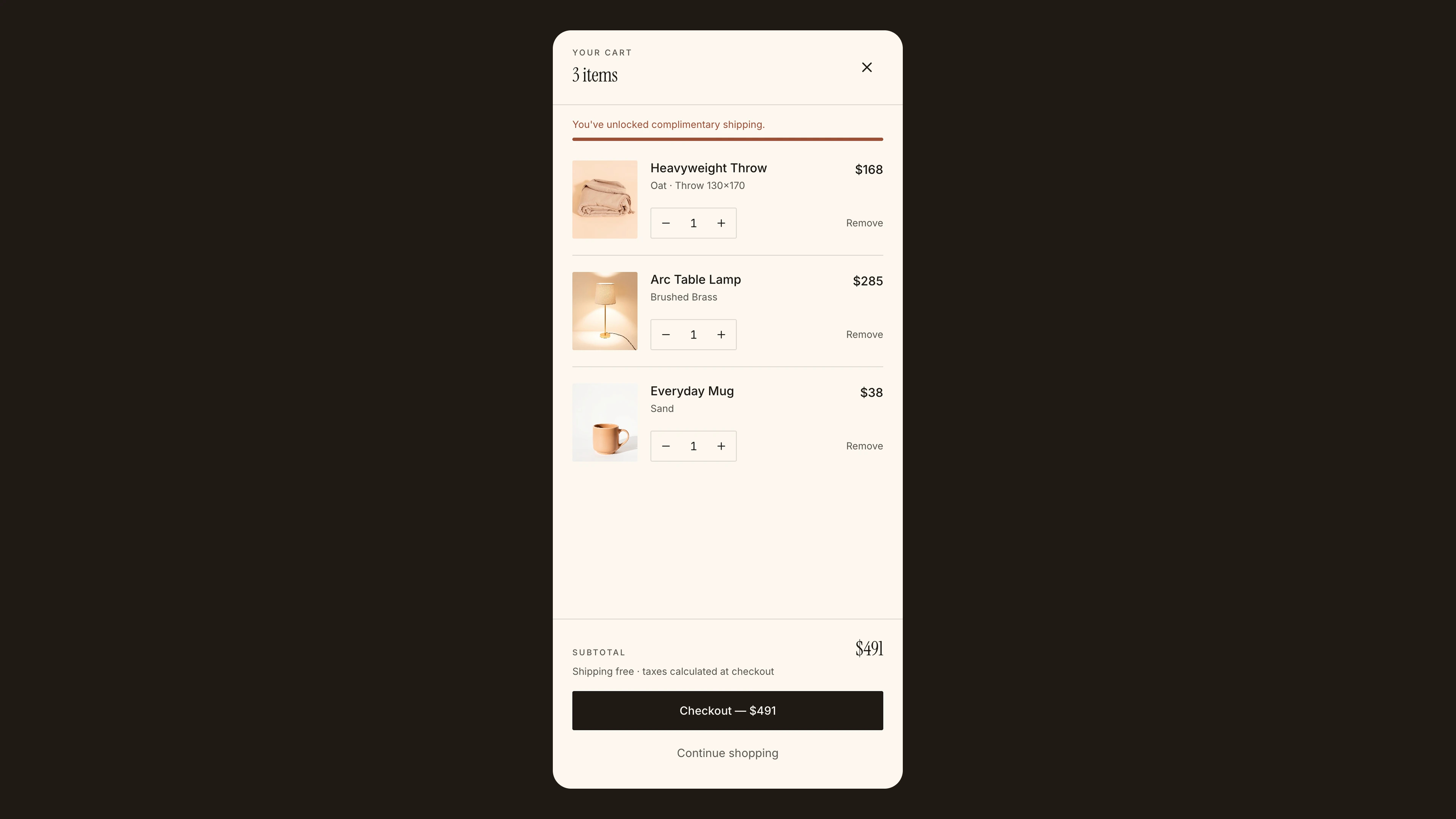
Checkout was redesigned as a simplified, one-screen experience that reduced cognitive load, surfaced order confidence cues earlier, and minimized drop-off between steps.
Premium micro-interactions
Fast add-to-cart feedback, tactile transitions, and clearer selection states elevated the perceived quality of the brand without introducing performance drag.
High-Velocity Execution
A four-week sprint model moved from prototype to performance-tested launch.
This engagement was structured as a concentrated four-week delivery cycle with fast decision loops and clear performance checkpoints, allowing the relaunch to move quickly without sacrificing polish.
Sprint 01
Commerce audit and UX strategy
Audit the legacy storefront, identify the biggest conversion bottlenecks, and define the shortest path to a materially faster buying journey.
Sprint 02
UI prototyping and design system setup
Prototype mobile-first flows, align merchandising and checkout states, and establish reusable visual patterns that reinforce premium perception.
Sprint 03
Front-end engineering
Build the Astro front-end and integrate dynamic React checkout components while protecting performance budgets across key templates.
Sprint 04
Integration and performance testing
Finalize integration, pressure-test checkout flows, and tune the storefront for mobile performance, responsiveness, and post-launch confidence.
Tech Stack
A lean headless stack optimized for speed, editorial control, and checkout confidence.
The selected stack prioritized speed, maintainability, and enough interactivity for commerce-critical moments without reintroducing legacy weight.
- Figma
- Astro
- TypeScript
- Tailwind CSS
- React
- Storefront API
Business Outcomes (ROI)
The new storefront converted faster because the architecture removed friction.
The business outcomes reflect what mattered most to the brand: faster product discovery, smoother checkout completion, and stronger return on traffic acquisition.
99/100
Google PageSpeed score on mobile
-42%
Cart abandonment within the first month
2.8x
Increase in mobile conversion rate
<1s
Product-page load time across core templates
Why this format matters
The value here is not only a better-looking storefront, but a faster path to purchase.
This representative case study shows how Laur approaches e-commerce as a revenue system: architecture, interaction design, and brand expression all aligned around protecting conversion and improving return on traffic.