Executive Summary
A secure, modern platform restored enterprise-level credibility.
The consulting firm needed its website to communicate authority and trust while removing the security and maintenance burden of an aging CMS.
This representative case study shows how Laur would migrate the firm to a modern static architecture that eliminates database-related vulnerabilities, reduces response time by 80%, and refreshes the brand for enterprise buyers.
Headline metric
100%
Database-related vulnerabilities eliminated
The primary architectural win here is a cleaner public-facing stack that dramatically reduces security exposure while improving operating confidence.
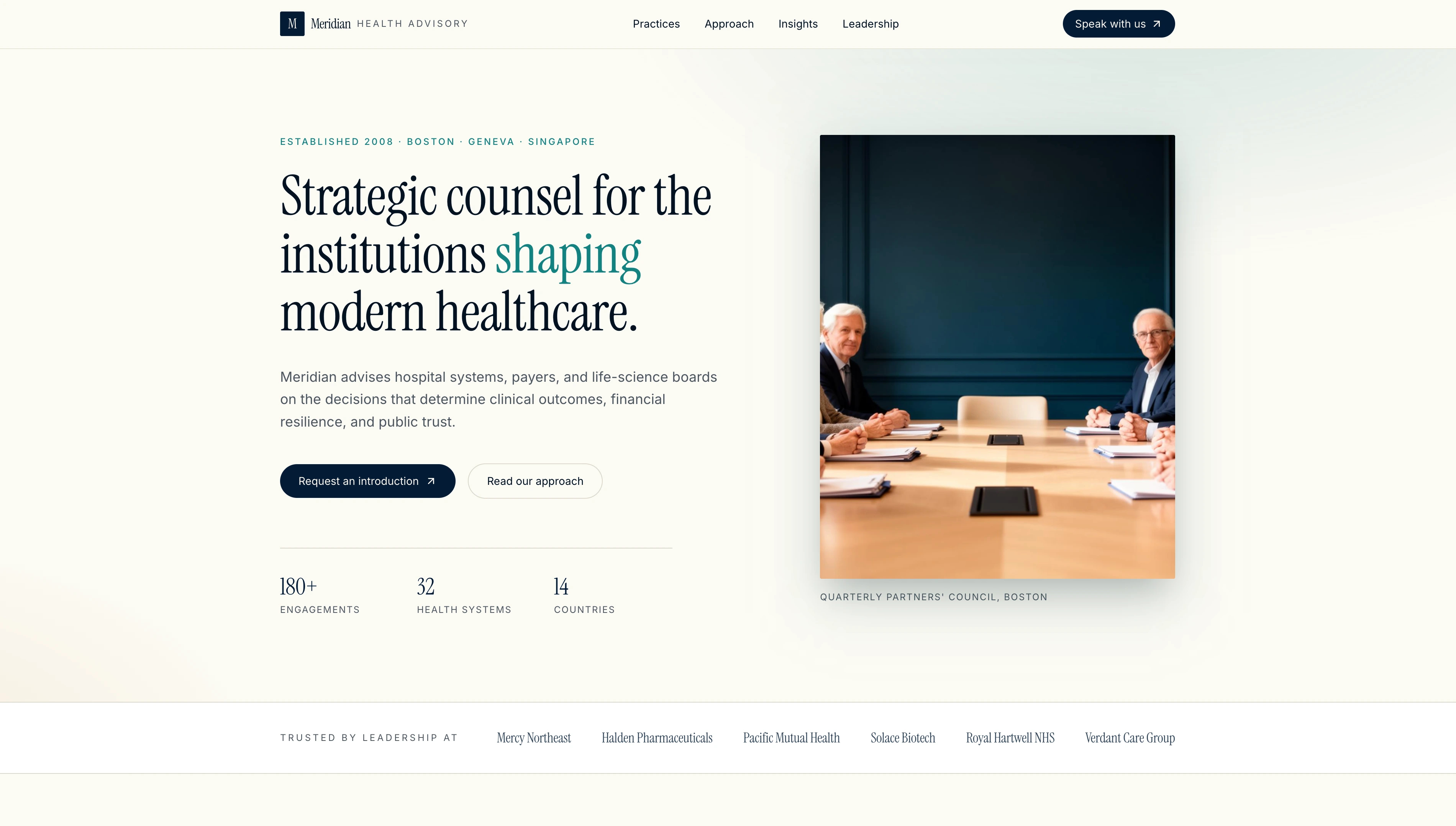
The Business Challenge
The legacy CMS was creating security risk and undermining enterprise credibility.
The previous WordPress environment was costly to maintain, visually dated, and increasingly difficult to trust. For an advisory business selling into enterprise healthcare networks, those weaknesses translated directly into reputational and operational risk.
Plugin maintenance burden
Routine updates, compatibility issues, and recurring downtime were creating avoidable operational overhead for the client team.
Weak authority cues
The visual language and content presentation no longer matched the standards expected by enterprise buyers evaluating healthcare consulting partners.
Security exposure
A database-backed CMS and aging plugin ecosystem introduced vulnerability patterns the client wanted to eliminate from the public-facing stack.
The Strategic Solution
A modern static architecture combined trust-first design with operational simplicity.
Laur proposed a full architectural reset. Rather than patching the existing CMS, the project reframed the website as a lean, high-authority platform where design clarity and security posture reinforce each other.
JAMstack migration strategy
The public-facing site was moved to a static architecture that removed the database from the delivery layer and sharply reduced attack surface.
Authority-led corporate redesign
The interface was redesigned around whitespace, typography, and trust-building structure so enterprise visitors could evaluate the firm's credibility faster.
SEO-safe content transition
Migration planning prioritized existing rankings, content continuity, and redirect hygiene so the brand could modernize without sacrificing discoverability.
High-Velocity Execution
A five-week modernization program balanced redesign, migration, and SEO continuity.
The program was structured to move carefully where risk was high and quickly where clarity already existed, keeping both stakeholder confidence and launch speed intact.
Week 01
Stakeholder alignment and audit
Assess business goals, map critical content, and identify the migration priorities with the highest security and brand impact.
Week 02
UX redesign and content structure
Redefine page hierarchy, authority cues, and CTA placement to support a more enterprise-ready first impression.
Week 03
Front-end implementation
Build the new Astro site with a static-first architecture tuned for speed, maintainability, and clean semantics.
Weeks 04–05
Migration, redirects, and launch QA
Move content, preserve SEO-critical paths, validate performance, and complete launch-readiness checks before cutover.
Tech Stack
The platform stack was intentionally simple, secure, and easy to maintain.
The technology approach prioritized long-term stability over unnecessary complexity, which was exactly what the client needed from a corporate web platform.
- Figma
- Astro
- TypeScript
- Tailwind CSS
- Static hosting
Business Outcomes (ROI)
The migration improved security posture, performance, and long-term operating efficiency.
The value of the modernization came from both the public experience and the reduction in ongoing technical drag.
100%
Elimination of database-related vulnerabilities
-80%
Reduction in server response time
0
Ongoing plugin maintenance dependencies
+31%
Increase in qualified enterprise inquiry starts
Why this format matters
Modernization should improve both trust and operational resilience.
This representative case study shows how Laur treats migrations as strategic business upgrades, not just technical rebuilds—improving security, performance, and buyer confidence at the same time.