Executive Summary
Better docs reduced support load and accelerated onboarding.
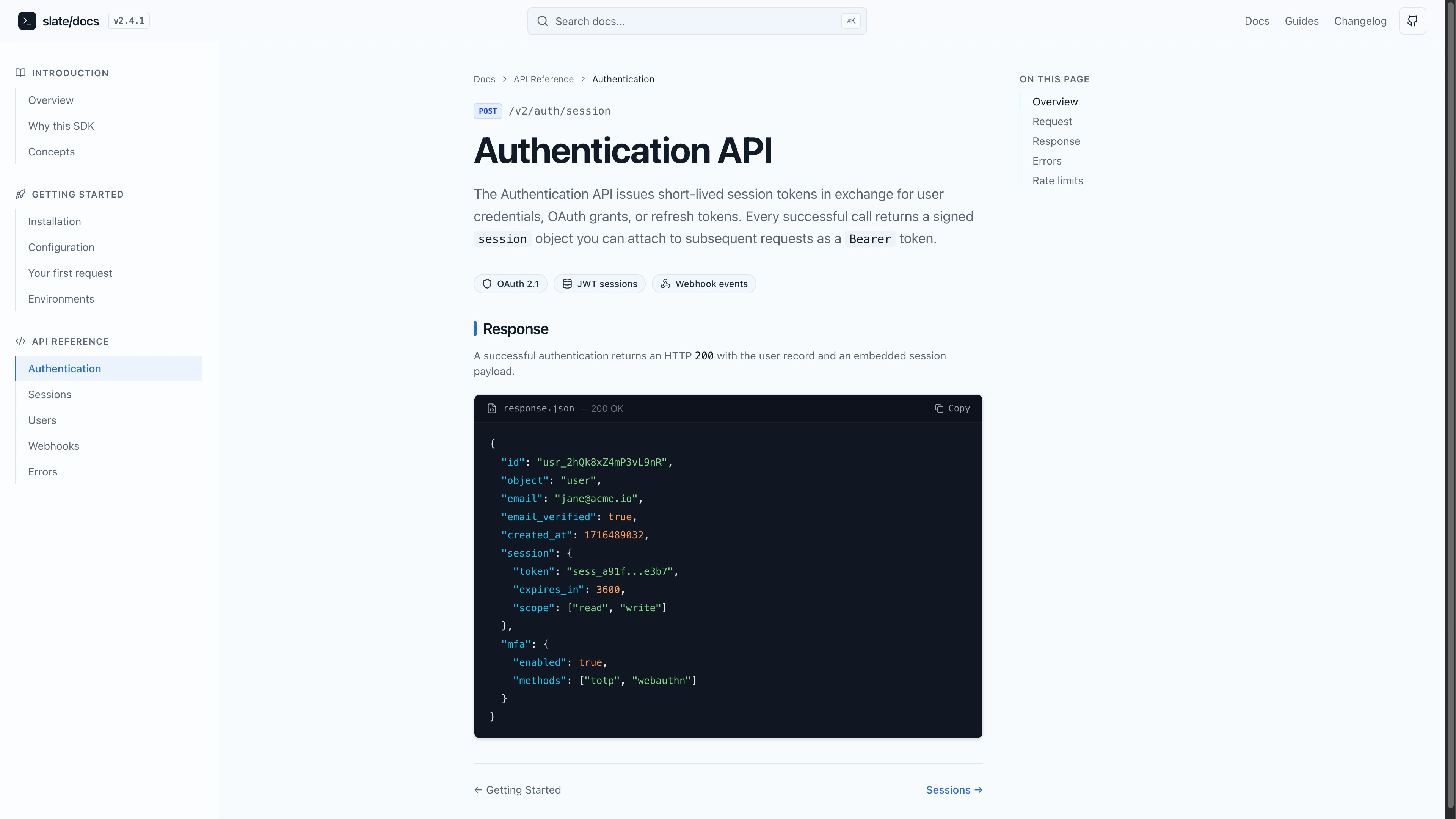
The platform needed its documentation to function less like an internal wiki and more like a polished product surface that developers could trust and navigate quickly.
This representative case study shows how Laur would combine strong information architecture, premium readability, and static-first performance to reduce support tickets by 30% in the first quarter after launch.
Headline metric
-30%
Reduction in level-1 support tickets
The most commercially relevant outcome for the business was lower support pressure and faster self-service for developers adopting the platform.
The Business Challenge
Documentation friction was increasing support costs and slowing adoption.
The company had solid technical capability, but its documentation made onboarding feel harder than it needed to be. Search was weak, navigation was inconsistent, and critical implementation guides were buried in long pages with little visual hierarchy.
Low discoverability
Developers struggled to find the right integration guides because the content structure lacked a clear taxonomy and index strategy.
Weak readability
Long, unstyled blocks of technical content made it difficult to scan for the exact snippet or configuration detail needed in the moment.
High support dependency
Because answers were hard to locate, the support team was repeatedly handling questions that should have been solved through self-service documentation.
The Strategic Solution
A premium documentation experience made complex implementation paths easier to trust.
Laur approached the portal as a product in its own right. The goal was not just a visual refresh, but a complete rethink of how developers discover, consume, and act on technical information.
Rebuilt information hierarchy
The content architecture was reorganized into clearer paths for onboarding, authentication, endpoints, and troubleshooting so developers could orient themselves immediately.
Instant-search experience
Search was positioned as a first-class interaction, enabling developers to jump to the exact guide or snippet they needed within milliseconds.
Typography-led reading design
Spacing, code presentation, contrast, and sidebar behavior were tuned to make long-form technical content easier to scan, compare, and trust.
High-Velocity Execution
The rebuild prioritized taxonomy, search, and readability in a four-week sprint.
The delivery process moved from documentation strategy into front-end execution quickly so the team could validate structure and reading experience as early as possible.
Week 01
Audit and documentation architecture
Map the existing wiki, identify recurring support pain points, and define the new taxonomy for onboarding, reference, and troubleshooting content.
Week 02
Design system for reading and code
Establish the visual rules for headings, tables, code blocks, navigation, and light/dark reading modes.
Week 03
Front-end build and content migration
Implement the static portal, migrate markdown content, and refine layouts for high-volume technical reading.
Week 04
Search, QA, and accessibility tuning
Finalize instant-search behavior, validate accessibility, and polish the experience for production readiness.
Tech Stack
The portal was designed as a static-first knowledge product, not a generic wiki.
The stack emphasized speed, maintainability, and developer-friendly content workflows while preserving a highly polished reading experience.
- Astro
- MDX
- Tailwind CSS
- Figma
- Instant search
Business Outcomes (ROI)
The new portal reduced support demand and improved developer self-service.
The improvements mattered because they reduced operational load while making the product easier to adopt and integrate.
-30%
Reduction in level-1 support tickets
100/100
Lighthouse accessibility score
0
Cumulative layout shift across the reading experience
-22%
Estimated time to first successful integration
Why this format matters
Documentation quality directly affects product adoption and support cost.
This representative case study shows how Laur frames documentation as a business asset: a faster, more readable, more discoverable system that helps customers succeed without unnecessary support overhead.